
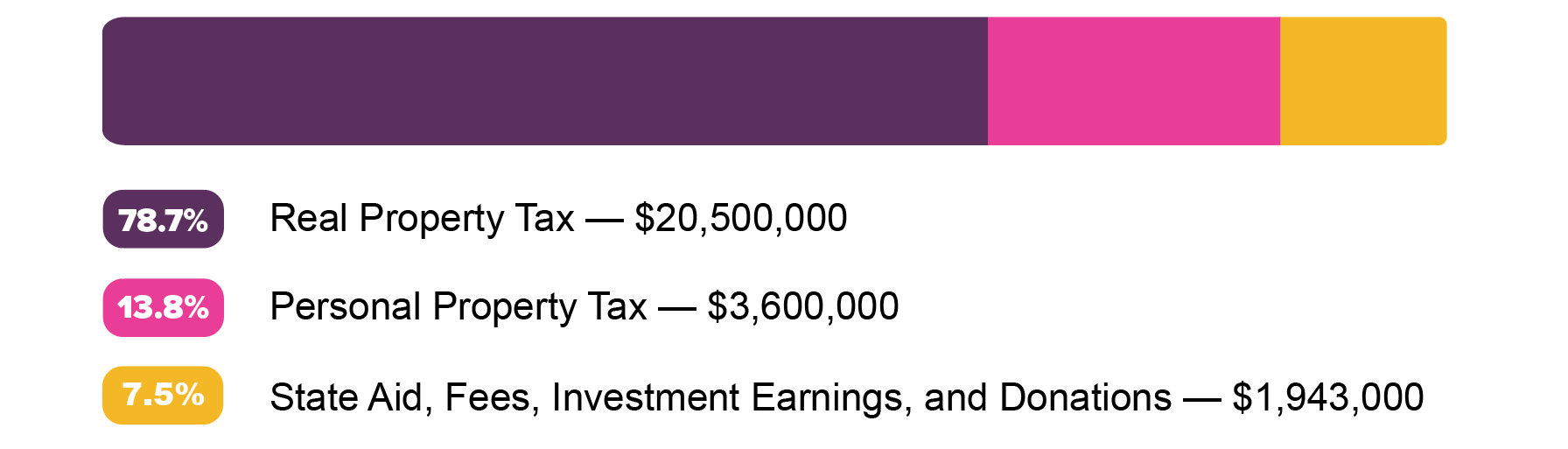
The St. Charles City-County Library is 92.5% funded by local property taxes, with a small amount of supplemental support from state aid, fees, investment earnings, and private donations through the Library Foundation and the Friends of the Library.
The Library funding structure is rooted in 1994, the last time voters approved a tax increase. Back then, St. Charles County was home to approximately 230,000 residents. Today, that number has grown to more than 430,000. That’s nearly double the population. Despite this significant growth, we continue to deliver on our promise of empowering minds, enriching communities, and inspiring lifelong learning within a financial framework designed for a much smaller community and a very different era of service.
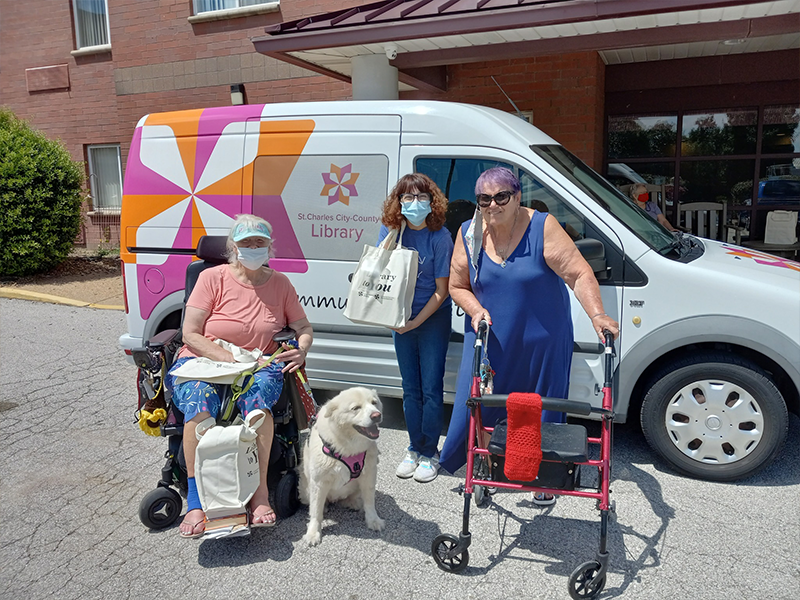
Since 1994, we have opened six new branch locations and reintroduced a bookmobile to expand access to underserved areas. We have evolved from a primarily print-based system into a dynamic provider of technology and information access, offering computers, WiFi, and a wide range of digital resources. And we’re out in the community, working with daycares, visiting senior living communities, and delivering materials to homebound residents.
Slow Defunding
Hancock Amendment - The Hancock Amendment requires political subdivisions like the St. Charles City-County Library to roll back its voter-approved levy when property values grow faster than the Consumer Price Index (CPI) or 5%, whichever is less. The Library’s voter-approved levy is $0.26 per $100 in assessed valuation in accordance with the Hancock Amendment; the Library has rolled back its levy to $0.1668 (36% reduction). However, many costs that libraries face — such as healthcare for employees, utilities, technology, materials, and insurance have grown faster than CPI. Therefore, the Library’s actual expenses are growing at a rate greater than inflation, creating a funding gap.
Senior Citizen Property Tax Freeze Credit – The impact of the Senior Citizen Property Tax Freeze Credit on the St. Charles City-County Library in 2026 was $160,000 and is expected to increase as property valuations continue to rise. Over the next five years, the cumulative impact is projected to exceed $1 million.
Under current law, the value of the Senior Citizen Property Tax Freeze Credit must be included as revenue when the Library calculates its property tax levy under the Hancock Amendment, even though those funds are never received by the Library. As a result, the Library is required to reduce its tax levy based on revenue it did not collect. This creates a permanent reduction in the Library's tax rate and an ongoing loss of revenue that extends beyond the value of the credit. Because no replacement revenue is provided, the cumulative financial impact continues to grow over time, reducing the resources available to support library services, collections, programs, and facilities.
Local and State Tax Property Tax Reform Proposals - Despite the overwhelming rejection of Proposition RT by St. Charles County voters in the spring of 2026, proposals to reduce or eliminate property taxes continue to be introduced and debated at both the local and state levels. Because property taxes are the Library's primary source of funding, any reduction in property tax revenue that is not offset by a replacement revenue source would impact the Library's ability to provide services to our community.
Tax Abatements – Tax abatements and incentive programs in Missouri, including Chapter 68, Chapter 100, Chapter 353, TIF, and similar mechanisms, divert property tax revenue that would otherwise go to the Library. These programs allow municipalities to capture voter-approved funds for economic development or redevelopment projects, thereby reducing the Library's funding base and constraining its ability to maintain services. These programs capture nearly $600,000 annually from the St. Charles City-County Library.
Proposals to Eliminate Personal Property Tax – Personal property taxes generate approximately $3.6 million annually, representing 13.8% of the St. Charles City–County Library's revenues. Eliminating this revenue source without enacting a new tax to replace lost funding would create a substantial and permanent loss of revenue, requiring significant reductions in library services and operations. The Library could not absorb a revenue loss of this magnitude without affecting service levels. Impacts would include:
- Closure of one or more library branches
- Reductions in early childhood literacy programs
- Significant cuts to the collection budget, resulting in fewer new books, longer wait times, and reduced access to eBooks and eAudiobooks
- Reductions to Library to You services, including deliveries to nursing homes, senior centers, and homebound individuals
- Fewer visits to early childhood centers and reduced Bookmobile service
Absent a replacement revenue source, these reductions would not be temporary. They would represent permanent service reductions that would diminish the Library's ability to meet the educational, informational, and literacy needs of St. Charles County community.
Real Impacts
The slow defunding of our Library has had a measurable impact on the Library’s ability to meet the needs of the community. The population we serve continues to grow and spread across a broader geographic area, and we are seeing increasing gaps in access, particularly in the western part of the county. At the same time, how people use the Library has fundamentally changed. Our branches are no longer simply repositories for books; they’re active, flexible spaces that support learning, connection, workforce development, and civic engagement. And quite honestly, many of our buildings were not designed for that.
The Library continues to respond to these challenges through disciplined financial management and responsible stewardship of taxpayer resources. Through attrition, we have reduced staffing levels by approximately 15% since FY20. We have also reduced spending on our collection by 11% since FY25, refocusing our limited resources on popular titles, early childhood literacy materials, large print, and eMedia. In addition, capital spending has been reduced by approximately 63% since FY25.
These decisions reflect the Library’s ongoing commitment to being a careful and accountable steward of public tax dollars while maintaining high-quality service to the community.
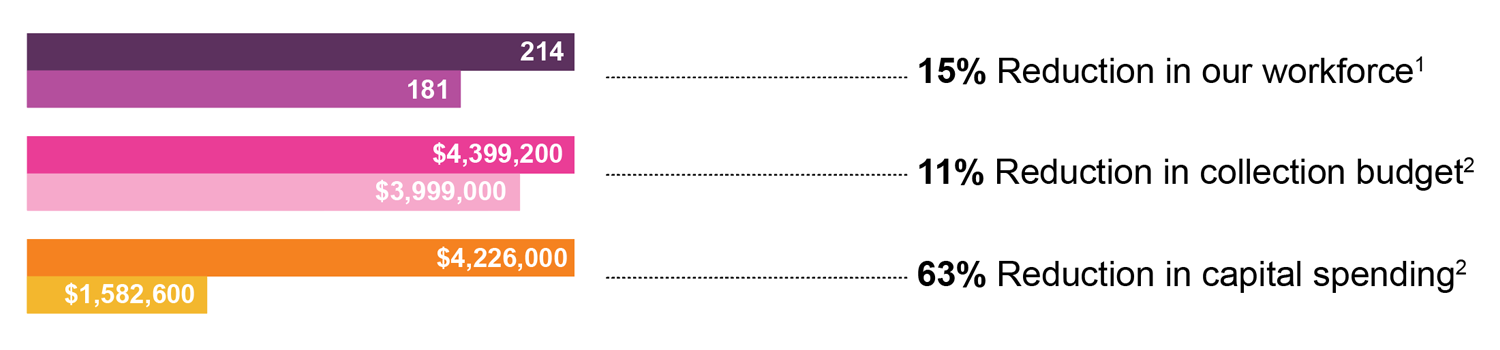
Notes: 1 From fiscal year (FY) 2020 to FY 2027.
2 from FY 2025 to FY 2027.
Why it Matters
- Over 6 million books and materials circulated each year
- 1.2 million Library visitors annually
- 5,000+ programs supporting early childhood literacy and lifelong learning
- 28,845 hours of meeting space used by individuals and community groups
- 51,000 items delivered to outreach customers
- 65,500+ hours of public computer use
- Passport, notary, technology and printing services, and free Wi-Fi
 |  |  |  |
 |  |  |  |
Empowering Minds. Enriching Communities. Inspire Lifelong Learning.
See answers to frequently asked questions.